
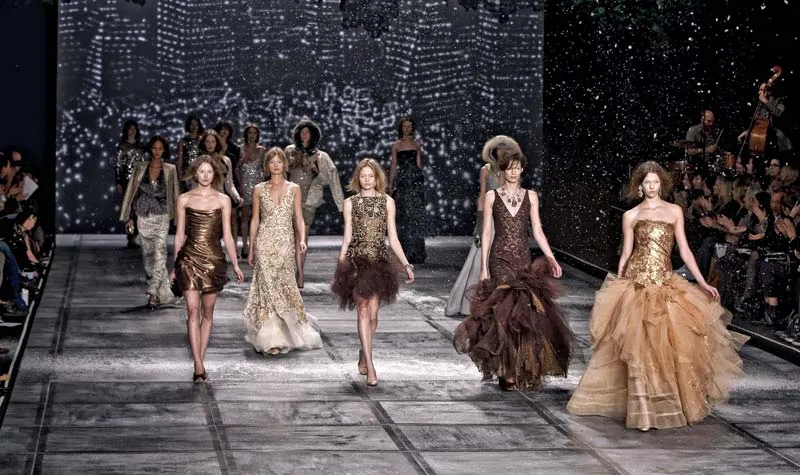

The fashion industry is standing on the precipice of its most radical transformation since the Industrial Revolution. As we approach 2030, the intersection of advanced technology, environmental necessity, and a fundamental shift in consumer values is rewriting the rules of style. The days of mass-produced, seasonal collections and opaque supply chains are fading. In their place, a more agile, transparent, and personalized ecosystem is emerging. To understand the fashion landscape of 2030, we must look at how digital realities are merging with physical craftsmanship to create a world where sustainability is not a choice, but a requirement for survival.
{ “image_generation”: “A high-resolution wide-angle view (at least 800px width) depicting a futuristic sustainable fashion studio in the year 2030. The scene features a high-tech 3D garment printer in the corner and a large holographic display showing a digital twin of a dress. The studio is filled with natural light and vertical indoor gardens. A designer is interacting with a fabric made of bio-engineered materials. The atmosphere is sleek, clean, and eco-friendly. No text or emojis in the image.” }
The Rise of the Digital Twin and Virtual Fashion
By 2030, the distinction between our physical and digital wardrobes will be nearly indistinguishable. The concept of the digital twin—a virtual replica of a physical garment—will be a standard offering for every major brand. When you purchase a physical jacket, you will automatically receive its digital counterpart to be worn by your avatar in the metaverse or displayed on social media through augmented reality.
This shift will drastically reduce the need for physical samples and “one-off” outfits purchased solely for digital content creation. Virtual fashion houses will operate without the overhead of fabric or shipping, offering hyper-creative designs that defy the laws of physics. For the consumer, this means a more expressive wardrobe that exists across multiple platforms, allowing for personal style to be maintained in every digital interaction.
Hyper-Personalization and 3D On-Demand Manufacturing
The traditional retail model of stocking thousands of identical items in various sizes is becoming obsolete. In 2030, the fashion industry will move toward a “pull” model where garments are manufactured only after they are ordered. This transition is powered by advancements in 3D knitting and automated laser cutting.
-
Body Scanning Technology: Consumers will have high-precision 3D body scans stored on their smartphones. When shopping online, these scans will ensure that every garment is tailored to their exact measurements, virtually eliminating the concept of standard sizing.
-
Localized Micro-Factories: To reduce shipping emissions, brands will utilize micro-factories located within major metropolitan areas. A dress ordered in New York will be printed and assembled in New York, often on the same day.
-
Zero-Waste Cutting: Computer-aided design will optimize fabric usage to ensure that almost no scrap material is produced during the manufacturing process.
The Era of Bio-Fabrication and Lab-Grown Materials
Sustainability in 2030 will move beyond recycled polyester and organic cotton. The industry is pivoting toward bio-fabrication, where materials are grown in laboratories using yeast, fungi, and bacteria. These bio-textiles are not only more sustainable but offer properties that traditional fabrics cannot match.
Leather grown from mycelium (the root structure of mushrooms) will be the standard for luxury goods, offering the same durability and texture as animal hide without the ethical or environmental baggage. We will also see the rise of carbon-negative fabrics that actually capture CO2 from the atmosphere during their production. By 2030, the most prestigious fashion labels will be those that can prove their garments contributed to the restoration of the planet rather than its depletion.
Radical Transparency and the Digital Product Passport
In the next decade, greenwashing will become impossible due to the implementation of Digital Product Passports (DPP). Every garment produced will be equipped with a scannable QR code or NFC chip that provides a complete history of its lifecycle.
-
Raw Material Sourcing: Consumers can see exactly where the fiber was grown and the environmental conditions of that farm.
-
Labor Conditions: The passport will verify that every person involved in the assembly of the garment was paid a fair living wage, backed by blockchain-verified data.
-
Repair and Resale History: The digital record will track how many times an item has been repaired or resold, enhancing its value in the secondary market.
This level of transparency will empower consumers to make decisions based on facts rather than marketing slogans, forcing brands to take full responsibility for their entire supply chain.
The Circular Economy as the Default Standard
By 2030, the linear model of take-make-dispose will be replaced by a fully circular system. Resale, repair, and recycling will be integrated directly into the brand experience. Major retailers will no longer just sell you a garment; they will offer a lifelong service to maintain it.
Clothing rental services will expand into everyday wear, allowing consumers to access high-quality pieces without the burden of ownership. When a garment finally reaches the end of its life, it will be designed for easy disassembly. Fibers will be chemically recycled back into virgin-quality yarn, creating a closed-loop system where a single piece of cotton can be reincarnated as a new shirt indefinitely. This shift will significantly decouple economic growth from the extraction of new natural resources.
AI as the Ultimate Style Architect
Artificial Intelligence will play a central role in both the design and consumption of fashion. For designers, AI will analyze vast amounts of data to predict trends with near-perfect accuracy, reducing overproduction. For consumers, AI-powered personal stylists will manage their wardrobes, suggesting outfits based on the weather, their calendar, and even their current mood.
These AI systems will also facilitate the “circular” lifestyle by automatically listing items for resale once the user has stopped wearing them or suggesting professional repairs when the AI detects wear and tear through smartphone images. The relationship between the consumer and their clothes will become more interactive, with technology acting as a bridge to ensure every piece in the closet is utilized to its full potential.
Conclusion: A More Human-Centric Industry
Despite the heavy integration of technology, the fashion industry of 2030 will feel more human than it does today. By automating the mundane aspects of manufacturing and logistics, the industry will place a higher premium on true craftsmanship and artisanal skills. Hand-finishing, bespoke tailoring, and unique artistic collaborations will become the ultimate luxury markers.
The fashion world of 2030 will be one where we own fewer things, but the things we do own are perfectly fitted, ethically made, and designed to last a lifetime. It is a future where style is an expression of both individual identity and global responsibility.
Frequently Asked Questions
Will traditional shopping malls still exist in 2030?
Shopping malls will evolve into experiential hubs. Instead of rows of stocked inventory, stores will function as showrooms where you can feel fabric samples and try on digital versions of clothes. Physical purchases will likely be sent to your home from a local micro-factory rather than carried out in a bag.
How will 3D printing change the price of clothing?
Initially, custom-printed clothing may carry a premium. However, as the technology scales, prices are expected to stabilize. The elimination of unsold inventory and the reduction in shipping costs will allow brands to offer high-quality, custom-fit garments at prices comparable to today mid-range retail.
Will fast fashion disappear entirely?
Fast fashion as we know it—cheap, disposable, and environmentally destructive—will struggle to survive under 2030 regulations. However, the desire for quick trends will remain. This will likely be fulfilled through virtual fashion for social media and high-speed, on-demand manufacturing using circular materials.
What will happen to traditional sizes like Small, Medium, and Large?
Standardized sizing is expected to fade. With 3D body scanning and on-demand manufacturing, clothes will be made to your unique dimensions. Brands may still use size ranges for loose-fitting items, but for anything tailored, “size” will be a personalized data point rather than a tag in a shirt.
Is bio-fabricated leather as durable as real leather?
Yes. Lab-grown and mycelium-based leathers are engineered to match or even exceed the durability and tensile strength of animal leather. Because they are grown in a controlled environment, they also lack the natural imperfections that can lead to weak spots in traditional hides.
How will the fashion industry handle data privacy with all this technology?
Data privacy will be a major battleground. Brands will need to use secure, encrypted systems to store body scans and personal style data. Trust will become a core brand value, and consumers will likely choose companies that offer the most transparent and secure data management practices.
Will everyone be wearing smart clothing with embedded electronics?
While smart clothing will exist, it will likely be specialized for athletics, health monitoring, or work safety. For everyday fashion, most people will still prefer the feel of natural, non-electronic textiles, with the “smart” elements residing in the digital passport or the virtual twin rather than the physical fabric itself.

Comments are closed.